
Introduction Schwann cells are essential glial cells in the peripheral nervous system (PNS), responsible for forming the myelin sheath around neuronal axons, which facilitates rapid nerve impulse conduction. These cells are crucial in nerve regeneration and repair, making them a key focus of neurological and regenerative medicine research. Rat primary Schwann cells have been widely used in experimental models to explore cellular mechanisms underlying myelination, neurotrophic support, and nerve regeneration.
This article provides an in-depth overview of rat primary Schwann cells, their isolation methods, biological functions, and research applications.
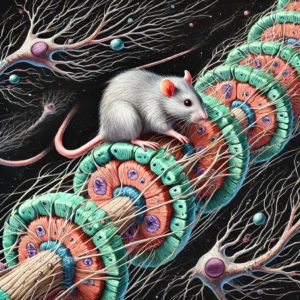
Isolation and Culture of Rat Primary Schwann Cells
The isolation of primary Schwann cells from rat peripheral nerves is a fundamental step in studying their biology and therapeutic potential. Standard protocols involve the dissection of the sciatic nerve followed by enzymatic digestion to obtain a single-cell suspension. The most common methods include:
- Pre-degeneration technique: This involves culturing the dissected nerves for several days before enzymatic dissociation, which enhances Schwann cell yield and purity (NIH.gov).
- Enzymatic digestion: Treatment with enzymes such as collagenase and trypsin helps break down the extracellular matrix, releasing Schwann cells from the nerve tissue (PubMed.gov).
- Purification techniques: The cultures are often treated with mitotic inhibitors such as cytosine arabinoside to remove contaminating fibroblasts, ensuring high-purity Schwann cell cultures (NCBI.nlm.nih.gov).
Cultured Schwann cells can proliferate in vitro under appropriate conditions, providing a valuable model for studying myelination, cellular interactions, and regenerative processes. Serum-free media optimized for Schwann cells have been developed to maintain their functional integrity (scholars.uky.edu).
Biological Functions of Schwann Cells
Schwann cells play several critical roles in peripheral nerve function and repair. Their primary functions include:
- Myelination: Schwann cells wrap around axons to form the myelin sheath, which insulates nerve fibers and facilitates rapid signal transmission. Studies show that neuregulin signaling regulates Schwann cell differentiation and myelination (NSF.gov).
- Axonal support and regeneration: Following nerve injury, Schwann cells dedifferentiate and adopt a repair phenotype that supports axonal regrowth. They secrete neurotrophic factors such as nerve growth factor (NGF) and glial cell-derived neurotrophic factor (GDNF) to promote regeneration (MedlinePlus.gov).
- Immune modulation: Schwann cells contribute to the immune response in the PNS by interacting with macrophages and modulating inflammatory processes during nerve repair (CDC.gov).
Research Applications of Rat Primary Schwann Cells
1. Peripheral Nerve Regeneration Studies
Rat Schwann cells are widely used in models of nerve injury and repair. Implanting Schwann cell-seeded nerve grafts enhances regeneration in animal models of peripheral nerve injury (NIH RePORTER). Research has also explored using biomaterial scaffolds embedded with Schwann cells to facilitate nerve regeneration (FDA.gov).
2. Myelination and Demyelination Disorders
Experimental models utilizing rat Schwann cells have provided insights into demyelinating diseases such as Charcot-Marie-Tooth disease and Guillain-Barré syndrome. These models help assess potential therapies for myelin repair (HHS.gov).
3. Schwann Cell Transplantation for Spinal Cord Injury
Schwann cell transplantation has been explored as a potential treatment for spinal cord injuries. Studies demonstrate that transplanted Schwann cells can promote axonal growth and remyelination in the injured spinal cord (ClinicalTrials.gov).
4. Neuroinflammation and Neuropathic Pain
Recent research has investigated the role of Schwann cells in neuroinflammatory conditions and chronic pain. Rat Schwann cells are used to study cytokine signaling and pain mechanisms in neuropathic conditions (Johns Hopkins Medicine).
Future Directions and Challenges
While rat Schwann cells provide an invaluable model for peripheral nerve research, several challenges remain:
- Improving culture methods: Current protocols must be refined to enhance Schwann cell survival and maintain their regenerative phenotype (NIH Blueprint).
- Enhancing therapeutic applications: Further research is needed to optimize Schwann cell-based therapies for clinical translation (NINDS.nih.gov).
- Understanding Schwann cell plasticity: Investigating the molecular mechanisms governing Schwann cell dedifferentiation and repair potential may open new avenues for treatment (Harvard.edu).
Conclusion
Rat primary Schwann cells serve as a crucial tool for studying peripheral nerve biology, myelination, and regenerative medicine. Their ability to support axonal growth and modulate the immune response makes them promising candidates for therapeutic interventions in nerve injuries and neurodegenerative disorders.
As research advances, Schwann cell-based strategies could revolutionize treatments for peripheral nerve damage, spinal cord injuries, and demyelinating diseases. By leveraging cutting-edge molecular and cellular techniques, scientists continue to unlock the potential of Schwann cells in neuroscience and regenerative medicine.